
Table of Contents
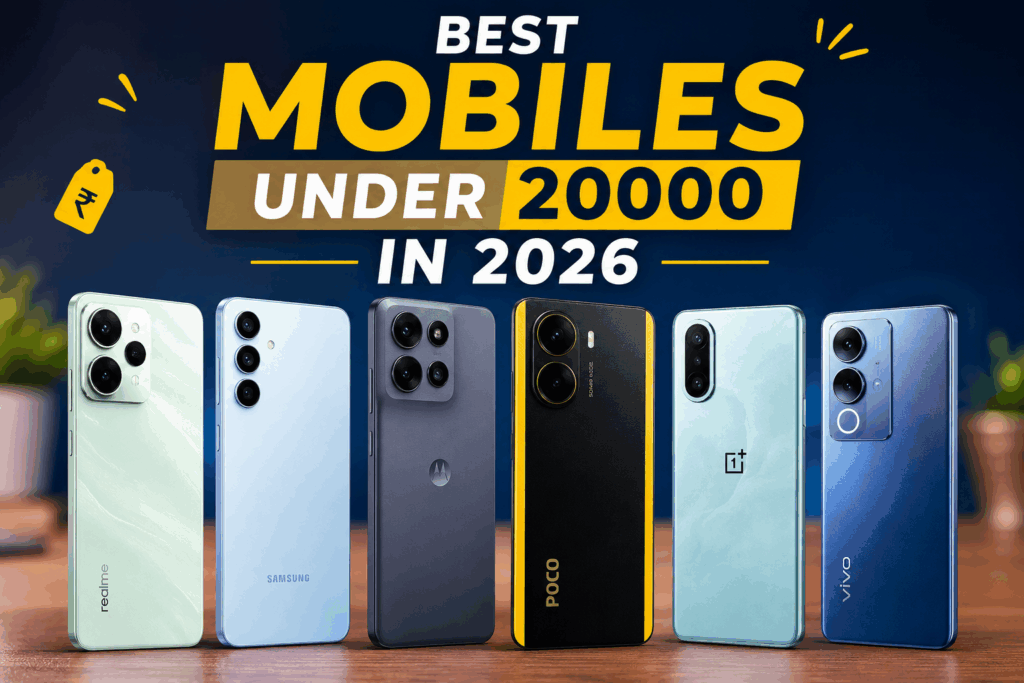
The budget smartphone market in India has transformed dramatically over the past few years. Earlier, buying a phone under ₹20,000 meant compromising on cameras, speed, or battery life. In 2026, that idea feels outdated, especially with the rise of the Best Mobiles under 20000 in 2026 offering flagship-level features at affordable prices. Manufacturers are now treating the mid-range segment like a battleground where every specification matters. As a result, users are getting premium features once reserved for flagship devices.
One major reason behind this shift is consumer behavior. People are holding onto smartphones longer than before, sometimes for four to five years. Because of this, buyers expect long software support, efficient processors, and future-ready connectivity. Smartphone brands understand this trend and are responding aggressively. Many devices under ₹20,000 now include AI photography tools, gaming optimization engines, stereo speakers, high refresh rate displays, and advanced cooling systems.
Recent listings from smartphone comparison platforms show that several phones under ₹20,000 are powered by processors capable of crossing 800,000 to 1 million AnTuTu scores. That’s impressive considering flagship phones from just three years ago delivered similar performance. The gap between premium and budget phones is shrinking rapidly.
Another reason for this explosion is India’s strong demand for 5G connectivity. Brands know buyers don’t want outdated devices anymore. Nearly every phone in this price segment now offers 5G support, making these devices more future-proof than ever before.
AI Features Are Now Common
Artificial intelligence is no longer limited to premium smartphones. Budget phones in 2026 now include AI tools for photography, battery optimization, noise cancellation, and productivity. Some devices even offer AI-based image editing and voice enhancement features that were once exclusive to flagship models.
For example, recent launches in India are already focusing heavily on AI-powered experiences. AI is improving low-light photography, stabilizing videos, and optimizing performance depending on user behavior. Think of it as having a tiny digital assistant inside your smartphone quietly making everything smoother in the background.
This shift matters because smartphone buyers today expect convenience. Nobody wants to manually tweak settings anymore. AI automatically adjusts brightness, improves battery life, removes background noise during calls, and enhances photos instantly. It’s similar to driving a modern automatic car instead of an old